

All it takes is a key and two heads

We need a bit of luck, well, it’s necessary every now and then, right? Our brilliant engineer, a tall, beautiful black woman, is about to present the results of the first token of 20 microLABs to the Management Team, 5 slides, let’s look at them together… first slide, two numbers, 24% and 105%.

24% is the measure of process improvement estimated before we started working together (data table in a separate file, to be distributed after the presentation).

105% is the measure of process improvement achieved during the 20 microLABs… data table in a separate file. Are we happy? Yes, indeed, very much… during the microLABs we’ve seen all sorts of things, it worked this time too.

The other slides summarize additional data: improvement in profitability, process lead time, a well-done presentation, rich and meaningful.

Even our brilliant engineer has absorbed, over the years, the entire Kaizen-lean repertoire, because with us it’s yes (105%) and before it was no (24%)?

It’s a medium-sized company by European standards, organizational complexity, markets, processes, certainly not easy, the intertwining and interdependencies are known: what really made the difference?

In the end, all this complexity and difficulty boils down to little: improvement (continuous, spot, whatever you want… wherever you want, at work, at home, in sports, in relationships…) can be achieved by increasing the value generated and reducing, eliminating, non-value. And this is the key. Simple, right?

Easy? Oh no, definitely not easy. You need to precisely identify the “Customer,” and it’s not so obvious everywhere: it’s easier at work, the Customer is the one out there (and only out there, don’t be fooled by internal customers, the issue is crucial, the Customer must always be outside, in the environment, not within the system in which one finds themselves) who pays for what they receive.

Value and non-value must be rigorously identified by observing and analyzing the processes from the Customer’s point of view: for example, transportation is non-value, transformation is value. Seven fundamental types of non-value, they are the old muda of Kaizen memory, they are more than sufficient, no need for more, and even for everyday work, it’s not taken for granted that we constantly keep them in mind, we all know the trap of the seventh dwarf.

And then two heads.

It takes two to succeed, exceptions are very rare, from one in a thousand to one in ten thousand, more or less that’s the order of magnitude.

We’ve called them supporter and protagonist, we are the protagonists, the supporter is the one who helps us, from start to finish: correctly identifying value and non-value, identifying and realizing what increases value and eliminates non-value, and then, once the new “productive” condition is reached, starting over and improving again, increasing value, eliminating non-value…

So, does the supporter need to be an expert? A wise person? Well, yes and no: at work, which is the area we’re interested in now, it’s not rocket science, you don’t need NASA scientists for this.

Certainly, they need to know the seven dwarfs (and we need to know them too), but that’s quick… and they need to be able to look, with us, at every step, from the Customer’s point of view, and correctly identify as soon as possible, with us, the value and non-value of each step.

Then they need to help us (not replace us, just help) in the observation and analysis phase, identifying the action that can increase value or eliminate non-value, then testing and trying, verifying and evaluating the result obtained, and transforming it into the new standard if the verification is positive.

And, if it’s not, starting over… eh? Oh yes, old stuff this too, PDCA, nothing else is needed, it is not rocket science, I had said.

In short, all old, known stuff: yet, facts and numbers say this doesn’t work, it’s not enough to generate, continuously, productivity and profitability improvements. True. Why?

Why, even using the correct key, does it not succeed? Apart from the usual Toyota, Komatsu, and Honda…

Not that the literature is vast, but it’s quite substantial, many have tried to answer, to propose new recipes, for forty plus years, everyone has hit, more or less quickly, their nose against the wall.

In one of the best contributions I know (Toyota Kata, Rother M. et al., 2010) interesting indications are found, pieces of attempts at answers, in the others, many, we find lots of how-to’s, the answers to why, not really. Isn’t it interesting?

Despite everyone knowing that no problem can be effectively solved without knowing the problem well, having understood it deeply, we keep finding solution proposals always (apparently, they are actually revamps, restyling, rephrasing, relabelling) new, and no new answer to: why?

Here, again, there is something new in what we propose: it doesn’t work because they (not us) continue to consider the problem in a non-systemic way.

And even when they try (yes, someone has tried, even recently, I have in mind a capable engineer, met when I served Schneider Electric, not a few years ago), it takes little to see that there is very little systemic in what they propose… better than nothing, but very little.

There is a call to look, consider, analyze the “system,” but usually nothing new on how.

Among the primary reasons for this insurmountable difficulty is an important gap, it may seem pure theory, or even metaphysics, but the fact is that at the base there is a poor, inconsistent, and contradictory model of the human mind.

And based on this model, mostly used without even thinking about it, as it is the most “common” and to which no one or almost no one objects and opposes, teaching-learning practices are devised and adopted that prove to be, irremediably, ineffective.

So do we come to explain to you which one is right, or at least better than before and tell you how to do it? Certainly not.

Saying, telling, helps little, often even harms.

It’s not a mystery, there is no mystery, a first draft of a systemic model of the human mind I published in 2016, it’s accessible to anyone, ISBN 9788892317758, since then I’ve made many advances, but the model has received few variations, it’s quite robust, it has held up well over the years.

Saying here what the “novelty” consists of takes little: like everyone else, even our brilliant engineer, to go from 24% to 105%, has modified some of her neural software (yes, we are biological machines, yes, we operate using neural software, yes, part of it is modifiable): could she have done it alone before? In theory, yes, statistics are always the same, from 1 in a thousand to 1 in ten thousand… incidentally, I am not among those.

To modify our most “critical” software, something only we can do and no one else, in the vast majority of cases we need the help of another, of a supporter, as we’ve called it to simplify and make ourselves understood, as much as possible.

Describing exactly what a good supporter does and doesn’t do is not impossible, it’s very long, here there’s no room: but even if there were, it would serve little, it would perhaps give a more detailed image, but necessarily incomplete and, substantially, hardly operational.

It’s exactly like the core of our method, identifying value and non-value, you learn by doing, you do by learning, without direct contact with the process, as frequently and continuously as possible, the risk of empty talk increases exponentially.

While we like and need the simple clarity of: before=24%, after=105%

No need to tell you how to do it so you learn, you need to do it.

And after you’ve done it, after you’ve gathered evidence of your success, then you’ll know how to do it.

The supporter, in the complex context of organized work, is also something else, does something else, besides enabling learning-change-improvement: we at Valinova are temporary supporters, usable to start continuous improvement that never stops, to enable your “supporters” and then exit the scene, as soon as possible… for today, that’s enough, I think.


Irresistible, just arrived, fresh: our brilliant engineer has presented her work, and she sends us a brief txt, [17:33, 22/07/2024] Done: colleagues very and sincerely interested, the DJ said we need to find a way to get young people working with this methodology… it went well.

Well, a little celebration is in order, even if small and short, it’s necessary, it’s hygiene and prophylaxis of good human behavior, otherwise, high costs are paid.

I wonder why the boss thought of advocating for the involvement of young people, obviously I don’t have the answer, I saw him briefly once, his schedule is said to be permanently headache-inducing, according to our magnificent engineer… but I have a strong hypothesis.

Young people have greater neuroplasticity than older ones, and so…

So, nothing. Age shows a weak correlation with the success of our work, the chances of success are the same for all age groups, this is the result of years of work and hundreds of people “served,” the decisive factors are really others. Which ones?

Well, come on, another time, now let’s celebrate.
Come Forward, Fool!

Our engineer is pleased; the new configuration works great: zero cost, zero investment, +25% productivity. His team finds better working conditions in this and there is now a kind of internal “competition” to see who does better in removing/reducing non-value and increasing value—a competition our engineer encourages in every way he knows.

In the group, there is one who has been resisting: “I won’t do that job, I have an exemption.” Serious stuff, not peanuts: a solid medical certification, fully confirmed by the company’s Occupational Health Doctor. Jorge cannot and should not come into contact with certain types of materials, and since that process involves some substances similar to those toxic to him, he understandably does not want to risk his health.

Initially, everyone agrees with the rule: no one should ever jeopardize health and safety, in any case. The company is strict on this, to the point of being almost persecutory. Our engineer himself was directly involved in a minor work accident years ago for not observing a minor safety rule, hurting himself slightly. Nothing serious, but all hell broke loose: severe reprimands, fines, performance evaluation shattered.

A heavy lesson learned and never forgotten. Sometimes, though, there is a suspicion that Jorge is taking advantage of the situation a bit. The team does not always see it well, nor does the engineer. Dynamics are known, and Jorge is quick to pull out the exemption card, well, yes.

Our engineer thoroughly studies the matter, checks, verifies, asks for an evaluation from the Occupational Health Doctor, who carefully verifies and confirms that the redesigned work cycles do not involve substances Jorge should avoid. Thus, Jorge cannot exempt himself from doing the work that all team members do and from respecting the common criterion of high interchangeability—all team members must be able to exchange roles in those specific tasks. They must know the shared job, know how to do it, and do it well enough.

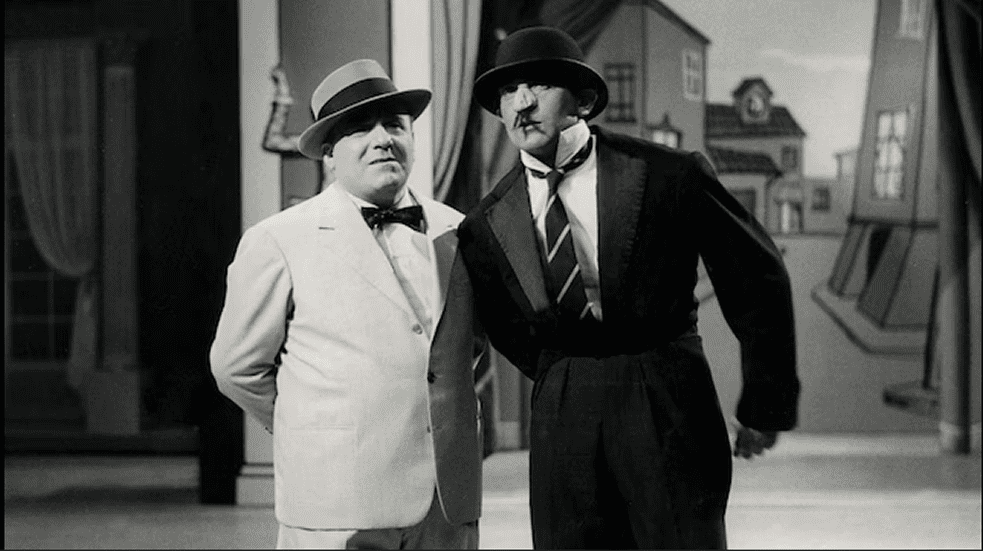
And now it’s about getting Jorge back in the field, so far on the bench. Why the phrase “Come Forward, Fool” from the Chiari-Campanini duo of the 1960s came to mind, I don’t know. Indeed, I follow the shoulder-protagonist thread: in this case, our engineer is the shoulder, and Jorge is the protagonist. We devote the greatest attention to the shoulder-protagonist interaction and support our protagonists in finding ways to be solid and effective shoulders for and with their protagonists.

Our engineer’s re-engagement strategy for Jorge, quickly identified and implemented, caught me off guard: he convenes a brief meeting with him, the Occupational Health Doctor, the Safety Officer, the Union Representative, and Jorge. He directly communicates the conclusions of the study to Jorge, letting the Occupational Health Doctor respond and reassure him. Others also intervene; the meeting ends quickly, objections resolved. Jorge will do his part.

Good, right? I rewatched some sketches of the Chiari-Campanini duo, discovering they were thirty years old, not exactly new, but still enjoyable and well-made—a dated quality of comedy and humor that still works. Now, there is no doubt that the workshop and the theater are different matters, but the common thread is (not seems, is) an alliance that is not questioned—a harmony that allows the duo to achieve results impossible for each individually.

Chiari and Campanini execute a common, shared task, thought out together, decided together, rehearsed numerous times before going on stage, adjusting timing, tones, “inventions,” and possible improvisations.

In our engineer’s strategy, I did not find these threads, and I would have liked to. I saw the semi-conscious fidelity to their beliefs, built over years and then mechanically obeyed, blindly executed.

Which, for the comfort of us all, is absolutely normal and right: these are codes we have refined over years, together with inherited DNA codes that have stood the toughest tests and brought us the best possible results. Until today.

Exactly what we find when we work on value and non-value—good, old, tested, and reliable codes. Until today. And exactly as for the crucial work on value and non-value, also for the continuous improvement of the shoulder-protagonist action—a process among the most complex in the world—the same paradigm applies: what is value, what is non-value, determined to increase value and eliminate non-value… every day from now on.

Difficult? No, nothing impossible or heroic, just daily doable stuff. Worth it? Yes, productivity and profitability must necessarily be accompanied by an ever-improving quality of work-life time. I think it is relatively easy for all of us to find a situation similar to that faced by our engineer and where we more or less used the same strategy, maybe even telling ourselves it went well and we did a good job.

I also think that we now realize that without the foundation of sincere and courageous alliance, of shared work, even if the show succeeds once, it is not really possible to definitively dissolve a doubt, more or less this: who is the fool?

If you think this article can help your network, your community, repost it.

#productivity #profitability #value #worklifebalance

Key Elements :

  1. Cost-Efficient Productivity Increase: Achieving a 25% productivity boost with zero cost and investment.
  2. Internal Competition: Encouragement of internal competition to remove non-value and increase value.
  3. Health and Safety Commitment: Strict adherence to health and safety regulations, emphasizing a no-blame culture.
  4. Flexibility and Interchangeability: Importance of team members being able to interchange roles and share common tasks.
  5. Sincere Alliance: Emphasizing the need for sincere and courageous teamwork and shared efforts.
  6. Continuous Improvement: The ongoing process of value enhancement and non-value elimination.

500,000 Euros Found… Now What

Found 500,000 Euros… Now What?

It’s a beautiful noon, the rain has stopped, and there’s even a bit of sunshine. It’s Friday, and Jubal seems unsure whether to laugh or worry. He shares an Excel screenshot, summary tables of piece numbers per shift, current times, target times, different machine usage. “I started on this last night, I couldn’t resist. These are simplified tables, the numbers are extracted from five other sheets… no, I haven’t done all the homework yet, the video of the first span’s processing phase is missing, I haven’t collected the numbers on-site yet, not yet, I got these from the CNC… yes, I’ll make the video, but now, guys, this is… well, doing it this way cuts the times and doubles the output… that means half a million euros a year, in net margin, without spending a cent more. I’ll build the new equipment with the savings from not using the current one, which will be used elsewhere…”

Well, folks, it’s the first time after a dozen microcycles that a kohai has “discovered” such a substantial windfall so early. At first, I’m not even sure I understand it correctly… but why doesn’t he know whether to laugh or worry?

My brain needs time to piece it together, and I certainly didn’t expect this from the previous microcycle… the agreements were “well-verified reality (gemba, video) versus the standard cost of ONE standard cost…”

Probably, if I were in Jubal’s shoes, I would have done the same, senpai or not, I want an approximate idea of where I’ll end up… yes, I think I wouldn’t have resisted either, even though I know perfectly well, from repeated experience, that Excel tells you what you want to hear if you interrogate it long enough and with determination… and in Jubal’s place, I would really want to hear “yes, bravo, eureka! You did it!”

Jubal seems simultaneously happy and worried… Stefano proceeds cautiously, not moving (and I understand why, if the source is Excel, the risk is that we’re listening to the Oracle of Delphi, “ibis redibis non perieris in bello,” a matter of commas, just like Excel) from keeping his attention focused on the data source… how did we verify the existence of the gap between standard costs and actual costs? By thinking about it or by going to see, at the gemba?

Stefano has seen much more than I have, he gets alarmed (and that’s exactly what should be done) when we lose real, direct, physical contact with the gemba… as systemic thinkers, we know that virtual environments (what’s in our mind) must be kept as close as possible, physically, to real environments, thinking-doing and doing-thinking, to avoid getting lost in the infinite combinatory possibilities our wonderful minds can generate… of these, few, very few, are good, and only the gemba helps us not to get lost.

And no, it’s not enough to be physically at the gemba, we’ve all been there, we’re perfectly capable of being present, physically, in a place, and simultaneously not being there at all, of following, as it’s commonly said, the thread of our thoughts… the video is ruthless, it doesn’t follow us, start, record, and it sees only what can be seen while we can go, virtually, anywhere.

A kind of safety device, in short…

But what the hell is worrying our Jubal? He should be as happy as a clam, but he doesn’t look it, what’s buzzing in his head?

We only have fifteen minutes, it took us a while, but we’ve become quite good, we rarely overrun, and if we do, it’s not by much. We converge on the next step, in view of the next microcycle, good for the encouraging projections, we’ll see. The step remains: well-verified reality (gemba, video) versus the standard cost of ONE standard cost…

Jubal seems curiously reassured, we’ll see what has been bothering him and find a good solution. For now, let’s take this step. Bye, have a good weekend, see you Monday…


He gave us a reason a while ago; this is one of the production lines dedicated to a flagship product… it’s not doing badly, and, simply put, you don’t change a winning team, right?

It seems that Jubal thinks it won’t be that easy to “convince” the big boss to approve the improvement plan, even though half a million euros in net margin should really excite him, it’s a great result… yes, okay, we need to do our homework well, prepare data and evidence, actual costs vs standard costs, new production cycle setup, savings, new marginality…

Jubal informed his boss at the time that he was working on an improvement idea with our support, but his boss hasn’t been involved in all the steps we’ve taken, he gladly gave his approval. How can we make him understand what Jubal can achieve? We’ll have to address it…

It’s also possible that we ourselves, microkaizen, become part of the problem, not the solution: in that company, they’ve done everything, six-sigma, WCM, Lean, and now here we come with a completely different method, just what they needed… it’s certainly possible that we encounter “resistance” from the other factions, how will we handle it?

It’s not a matter of envy, commonly put (let’s set aside systemic thinking for a moment), it’s that it’s not easy to accept that things were done in a way that didn’t generate that margin, there’s a risk that someone fears losing face, losing credibility… take my bag, before it wasn’t mine, now it is, later it won’t be mine anymore, but don’t take away my name, my honor: this doesn’t make you rich, and it makes me very poor.

It shouldn’t be this way, of course, systemic improvement needs a no-blame context, where nothing that has been done (or not done, that’s also doing) is used to discredit. The constant focus on the gemba, on continuous improvement, is safe within the framework of recognizing that everyone can only do their best, can only do their best: and we all start from this to improve and keep improving.

And then, for us, there’s the bigger risk, the risk that this work is mistaken for what it is not and should not be: we do not do cost cutting, cost reducing, cost saving, process optimization, it’s not enough, those are just shadows, side effects.

With all due respect, it’s junk, shiny fool’s gold that seduces and distracts from the focus that must be kept constant on the search, on the gemba, for value and non-value, basing every improvement initiative solely on that, and on building, every day, senpai-kohai relationships among those who work together.

Jubal has also taken the first steps in this regard, sharing some parts of the work he’s doing with us with his collaborators, he hasn’t told us much about how and what he did, but the little he told us, he told us while laughing contentedly…

The half-million-euro windfall risks overshadowing what has greater value not just for Jubal and his boss, but for the whole company: yes, it’s the method, this is what needs to be protected, spread, and supported, this is what has the greatest value, this is what allows the organizational machine, the organizational system, to improve, every day, productivity and marginality.

Not that Jubal has influenced us, but we too are simultaneously happy—good grief, it’s quite a windfall—and worried about how it will end… maybe it would have been better not to find 500,000 euros…

+23%,+100%… how is your Supporter?

24 March 2024

It’s essential to do the tasks well, preparing data and evidence, comparing actual costs versus standard costs, new production cycle configuration, savings, new profitability…

Jubal informed his boss in advance that he was working on an improvement idea, with our support, but his boss was not involved in every step we took, and he readily gave his approval. How can we ensure Jubal’s boss fully understands what Jubal can achieve? This needs to be addressed…

It’s also possible that we, Valinova, might become part of the problem rather than the solution. That company has done everything: Six Sigma, WCM, Lean, and now we arrive with a completely different method. It’s highly likely we will encounter resistance from other departments. How will we handle it?

It’s not about envy, simply put (let’s set systemic thinking aside for a moment), but it’s hard to accept that what has been done so far hasn’t generated the desired profitability. There is a risk that someone might fear losing face or credibility. Taking away my bag doesn’t make you rich and leaves me impoverished.

It shouldn’t be this way, of course. Systemic improvement requires a no-blame context, where nothing done (or not done, which is also an action) is used to discredit anyone. Constant attention to the real process and continuous improvement is safe within the framework of acknowledging that everyone has done their best and can only do their best. We all start from here to improve and keep improving.

Furthermore, for us, the biggest risk is that this work is mistaken for something it is not and should not be. We are not about cost-cutting, cost-reducing, or process optimization. Those are just shadows, side effects.

With all due respect, that’s just glittering junk that seduces and distracts from the focus that must remain on the search, the real process, for value and non-value, and basing all our improvement initiatives on that. Building, every day, supporter-protagonist relationships among those working together.

Jubal has also taken the first steps in this, sharing with his collaborators some pieces of the work he is doing with us. He hasn’t told us much about how and what he did, but what little he did share, he did so with a satisfied smile…

The half-million-euros breakthrough risks overshadowing what is of greater value, not only for Jubal and his boss but for the whole company. Yes, it’s the method that needs to be protected, spread, and supported. This has the greatest value, allowing the organizational system to improve productivity and profitability every day.

30 May 2024

Here we are, next week we go live. It has been more than two months since the rapid improvement. The piece you just read is from 24 March, and since then, many things have happened. Jubal has done everything possible, completing the testing phase of the new method, now called the Valinova method. He has been brilliant, using a production phase to generate a 23% productivity increase in three weeks at zero cost and zero investment.

Now Jubal has valid proof, generated and confirmed where they work, to present to his boss, ensuring everyone of the method’s validity. This identified the half-million euros in profitability that can be generated, alongside a 100% productivity increase from 20 pieces a month to 40 pieces a month, at zero or nearly zero cost, except for a possible supplier modification to one of their special compounds, which won’t cost anything, but we are sure the supplier will try to make it difficult and squeeze a few more percent on the old price.

We should be soaring on this process innovation (yes, it is innovation, some things are changed from before; we can and should consider it innovation generated from type 2 continuous improvement, see the next post), but instead, damn it, it’s one step after another. We could have concluded everything in three weeks and started earning margins two months ago, besides selling more (the items are in high demand). Instead, after more than two months, we are still stuck with in-house feasibility tests. We can’t get the new material before the project is approved, and the project can’t be approved without positive feasibility tests, which need to be done with what we have…

The latest news from yesterday is that even these final tests will face a five-day delay due to internal supply chain delivery delays…

Will we be ready to go live next week? We’ll make it just in time, AGWWPGBMA… eh? Oh yes, ancient maritime transport contract clauses: All Going Well, Weather Permitting, God Blessing and Mary Approving, that’s how it was sold to me.

Going live? We’re not in a theatre; this is a factory. What does it mean that next week we go live? It means that Jubal presents the project to his boss to get the necessary permissions to proceed with the half-million-euro breakthrough and 100% productivity increase… that’s what “going live” means.

Knowing that Jubal’s boss, even though he is a big shot there, has a boss from whom he needs to get further permissions…

Maybe no one noticed, but towards the end of the first piece of the post, there are two cross-outs, gemba and senpai-kohai, the latter replaced by supporter-protagonist.

Still in theatre or cinema? Certainly not, it’s not about names or nomenclature, but substance. We Westerners cannot replicate the senpai-kohai dyad; it’s in the DNA of Japanese culture. We didn’t grow up with roots in that DNA.

I recall, and thank him again, a passionate discussion with Luca Celora, a systemic friend and rare professional. He worked in Japan for many years, recognising and honouring its diversity. The closest we have is the “vecio-bocia” (if curious, check ChatGPT, it has interesting and accurate descriptions), known among the Alpini corps, unknown elsewhere, now on the verge of extinction due to modern times.

It’s not that the Western equivalent of senpai-kohai doesn’t exist. It does; my son found a top-notch senpai. I have seen a few here and there, spontaneous germination. For the Japanese, it is a social constant, and Toyota intentionally links everyone to a senpai, a systematic and stable systemic property.

Jubal’s boss is not Jubal’s senpai. Jubal’s boss’s boss is not Jubal’s boss’s senpai, and he is unlikely ever to become one, even if he were interested. Our diversity requires a different way to approach this crucial organisational junction. The best approximation we have found is the ssupporter-protagonist, where the supporter helps the protagonist to do well and succeed. Easier? The supporter is always of a higher rank, and the protagonist is always closer to the real processes. No, not easy. But possible, doable.

This is one of the two conditions for systemic, daily continuous improvement, not based on initiatives, intuitions, or strokes of genius (which are also needed and fine but are not “continuous” or daily). Instead, it is based on a daily grasp of the real processes, constantly focused on identifying and recognising non-value and value, eliminating non-value, and increasing value.

If Jubal had his supporter where it should have been, and his supporter, in turn, had its supporter where it should have been, it would have taken us three weeks. As it was, it wasn’t. Well, it’s just another process non-value. Let’s get to work and remove it… oh no, of course not, Jubal’s boss is a good man; we don’t want to remove him. Nonsense. Our bet is that we will soon have him as Jubal’s Supporter. That’s why we are working so hard on the “internal presentation.” It’s a process change, a stable process improvement, which we want to achieve. And we will achieve it.

And you, how is your Supporter?

Tacking

Neither Stefano nor I have anything to do with sailing or nautical activities. Stefano is passionate about motorcycles, music, and cinema, with no relation to water. I have been a professional athlete for years, in the third category of FIBIS, recognized and integrated within CONI, speciality 5-pin international billiard, among other interests like films and music—again, no water involved. But the similarities are seriously considered, and my image of these first few months of 2024 is precisely that of a hard tack.

Sticking with the metaphor, for almost two years we tried to keep the wind at our backs, leveraging the current generated by kaizen, six-sigma, WCM, and Lean in all its forms, seeking accommodations, integrations, innovation in continuity: field confrontations with “subject matter experts” and laypersons left us no alternative, as we weren’t getting anywhere.

Doubts were there from the beginning; Stefano often grumbled, few like the Japanese approaches, the kaizen terminology sounds stale, it’s irritating, we should be able to do things without having to name them, it confuses people, they think they recognize something they’ve seen before, and end up not understanding what we’re actually doing…

From the standpoint of method specificity, the tekné, he is my Maestro. We began addressing it ten years ago, when I was involved in corporate task forces for change and organizational development, setting them up and supporting them until the change/development was achieved. I taught at university and worked as an executive coach; he had already mastered nearly all of it—kaizen, green belt, lean, the whole repertoire.

Our common finding, on partly similar and partly different fronts, was: damn, people don’t learn, one in ten if we’re lucky, and we are not often lucky.

The problem isn’t the techniques or tools, the obstacle isn’t there: where is it, and how do we remove it?

We figured it out two years ago, Human Behavior Systemics (and Learning, since learning is a behavior, a very special one, but it remains a behavior) provided essential keys to completely reconfigure the method (here I am the Maestro). Stefano, very skilled, conducted the necessary experiments on his sites, with positive outcomes; I conducted other experiments in completely different areas, bringing significant confirmations.

We started with MK Consulting, microKaizen Consulting, trying to keep the good parts of everything (tailwind), but we only managed to achieve satisfactory results where and when we had the courage to let go of practically everything that had marked the steps of those before us: we understood the reasons, and, not happy about the tack we had to take (it’s a damn hard job for us), we began it, and now we are sailing close-hauled.

I confirm, neither Stefano nor I have anything to do with nautical activities, but you don’t have to be an expert sailor to know what it means to sail close-hauled… well, I admit it, I did take some sailing lessons, I wanted to experience moving without the noise of engines, chains, and gears, but it’s not necessary, for our purposes, neither for you reading this, nor for us.

Stefano and I are not particularly fond of Italy; we consider ourselves citizens of the world and would like to be seen as such. The national-popular horizons do not excite us at all; we constantly deal with global issues that cannot be resolved on a local scale. But whether we like it or not, given that, willingly or unwillingly, Stefano and I were born and raised in Italy and are Italian citizens, we have to accept it.

There are two keystones of the method, elements known across all latitudes and longitudes: value and connection.

We’ll get back to this, talk about it again. The terms are simple, even trivial, but the meanings and nuances we employ, applied in the practice of the worksite (we also give up gemba, sigh, I liked it), pushed energetically and repelled even more energetically towards taking every single moment as a place of production and expression of value and dis-value, non-value (sadly, no more muda, mu-ri, they were so handy…) are not at all.

The true importance of the hero and sidekick relationship is anything but trivial: each person is, knowingly or unknowingly, someone’s sidekick, and at the same time, everyone is potentially a hero, who benefits from having a reliable sidekick to perform effectively.

Yes, here Stefano, an unrelenting cinephile, would say, just as it is impossible to imagine the success and the great performances of Laurel without Hardy, Totò without De Filippo, or other famous pairs like Mulder without Scully, Sherlock Holmes without Watson.. out of the metaphor, sidekick and heroes are everywhere.

These partnerships, whether in comedy, drama, or action, illustrate the indispensable dynamic between a leading figure and their supportive counterpart, each enhancing the other’s strengths: please note that the first heroes are those who directly deal with the real processes, and their sidekicker are their supervisors…

And so we must let go the senpai-kohai twosome (sigh, I really loved it), we have a different story…

It’s just a metaphor here, to try to help understand: there, on the worksite, it’s flesh and blood, tough stuff, strong stuff, every minute, every hour, every day: not trivial or obvious at all, but a conquest of every minute, every hour, every day.

The name is not the thing, they say, but names are only the tip of a complex network that indicates interactions and meanings in the mazes of our mind: we don’t want names, interpretations that substitute for what we see with our own eyes… the attempt, difficult, and not even that new, the invitation to go, to return, to the things themselves, has been around for at least two centuries, failing at that time, now appropriately fueled, today, by a better understanding of how we function as living systems, well, it’s successful.

To prolong here, now, the attempt to explain what it is, what the new method consists of, is a waste of time, words would take over things: thinking by doing, doing by thinking, are the best descriptive approximation, insufficient and inadequate. Why? Here we are just thinking, that’s not enough, it’s necessary to do-while, think-while.

For this reason, we have not been able to find better alternatives, the microLAB, the microLABs, are the only gateway, there it is doing-thinking, and thinking-doing.

For this reason, the turning point: ValiNova takes the baton and proceeds, sailing close-hauled.

Sailing close-hauled presents not just a challenge, but an opportunity to harness the winds of change effectively. It demands skill and precision, yet it is within these very conditions that we find the potential to excel and advance. With ValiNova, you’re equipped to navigate these challenges successfully, turning potential headwinds into a course towards achievement.

Your microLAB awaits you, patient, it’s not in a hurry, and it does not linger: the sooner you start, the sooner you arrive.

Time in Improvement

We are looking at a plant layout made with CAD—clear and precise—one of the five bays served by the overhead crane. Francesco connects each section to the videos we have examined together: “Here’s this one, here’s that one,” starting from the third section from the bottom up, where a machine performs a task. The piece must be positioned with millimeter precision; otherwise, not only does the task result in a defective piece, but the machine literally falls apart… it has happened more than once. Lesson learned, it doesn’t happen anymore. But the price to pay is that the transport and setup time for the piece to be worked has become very long. The special tool used by the overhead crane to transport the semi-finished product from the previous station to the third section allows for a final setup in a few seconds but imposes a very long time, which has a significant impact on the number of pieces that can be worked per shift… So explains Francesco, and we see that he has recorded the muda with this label: transport time. Seeing so many, it’s quite normal at the beginning to scrape one’s eyes and record only what is seen—it’s easier said than done. I try a good analogy: “Francesco, I ask you to remove the time from your recording, column M, cell 16…” Francesco looks at us slightly surprised; it probably doesn’t seem like an unacceptable request. We see him move the cursor towards the cell… I continue: “Indicating the time here risks confusing us. Time is not important at this moment; it doesn’t matter how long it takes now—it’s a transport muda. The non-value remains until we eliminate it. We are now hunting muda, not their shadows… I know it takes some training; the good old software immediately tells us their opinion, so we record ‘transport time’ without realizing it. We remain within a mental perimeter where we can’t even conceive the idea of eliminating it, while that is exactly the direction we can and must go. Through improvements, we will never reach the ideal condition of zero transport muda; we already know that, but we can always improve. Time and costs are useful, but they serve after we have managed to keep muda at the center and never forget them: time and costs are our mind’s elaborations. We don’t see time, and we don’t see costs either. Muda at the center—clear, clean, sharp, precise always.” Francesco nods, modifies cell M16: transport, period.

I am not a teacher, with or without a stick. I don’t teach and don’t want to teach anyone anything… I say it often. I try to mitigate it, but I don’t think I have resolved my transport muda: in the world I am in now, there are no errors, no faults… it takes little to conclude that, well, there are no right things either and no merits. And this conclusion, which is true for me, also scares me. It remains the best I’ve found so far. How to help Francesco present, help him in the mise en place of his new piece of software? For me, it has now become “almost” automatic, but on this automaticity, I try, and it seems I succeed, to exercise continuous “control.” I want (not “must”) to be aware of the step I’m taking, even if it comes easy after many years of practice. But every time is new; every time what happened before—hundreds of faces, thousands of situations faced—no longer counts, no longer serves, I can’t rely on it: who I have in front of me now is a unique and unrepeatable form of life similar to me and everyone for the systemic part; some software parts are similar, but even if plausibly a minority, the share of different neural software is what decides success or failure. I know that the person in front of me “works” using software that I partly don’t know, that has no precedents and won’t repeat later, and I know that it’s precisely how I manage to govern the interactions and iterations with this share of original and unknown software that totally determines the success or failure of my work… and my client’s work, on which my survival depends again, and returning to the client, his success or failure in achieving what he desires for himself: productivity, profitability, continuity, security. How do I get Francesco to look steadily without getting confused, without losing grip, at the things-to-change, keep the impossible horizon of zero muda clear, and not follow the “shadows” of the muda, the side effects they generate in the process flow we are trying to improve? “Francesco, I ask you to remove the time from your recording, column M, cell 16…” No matter how I put it, whatever I say or do, simply because it is different from what he or she evidently uses, it poses itself as a disconfirmation, sounds like it’s not right/correct/appropriate… this happens to all of us always, and there’s nothing to do about it. We work like this. We are systems—I know I’m repeating myself, it’s inevitable—equipped with sophisticated control systems since we are extremely complex and sophisticated systemic “machines,” we vitally need our continuous checks to give a green light not only to heart-liver-lungs-pancreas-muscles-brain but also to the neural network, basic software, and specialized software. That Francesco records “transport times” is neither fault nor error, nor right nor wrong; it is certainly the best he could do when he did it (oh yes, this is an absolute truth, always true not just now): what I present to him tells him that his software might have failed. In his world, let’s say the normal world, that is a mistake, and if it’s a mistake since he did it, then he was wrong. If he was wrong, he wasn’t up to it (it’s his fault); if he wasn’t up to it, he’s in danger—they can fire him: our control software, when faced with negative feedback, activates standard protections. There are several; the most frequent is to ignore it, process it as a false negative, and move on. The second is to demonstrate that the negative feedback is wrong; it usually implies that even the one providing negative feedback is wrong. What is wrong is a threat, better get rid of it. We don’t do it on purpose; this is the basic functioning of everyone… and how do you “overcome” it? Yes, I know I declared at the beginning what attenuator I introduce as soon as possible. I don’t teach anything to anyone, I don’t judge anything or anyone, maybe he listens and accepts, maybe he doesn’t believe it and processes it like, “yeah right, another one”: Francesco has seen dozens of consultants in his life, these are things they say… Even if it is the pure truth, nothing I point out to Francesco is new to him. He literally knows everything he needs to know; he has all the connections between the pieces he needs to manipulate: technically, literally, I don’t teach anything. This doesn’t mean I do nothing. Sure, I am an active element of a transformation that otherwise most likely wouldn’t happen… very few succeed alone in this field, I can think of a couple out of hundreds. I didn’t declare within which frame, which framework I did what I did, and neither what I did (and especially didn’t do) to build that framework within which we interact—the part of the framework that depends on me… and I certainly won’t say it. It’s one of the most precious secrets of the craft I practice. I could say secret of the art if I considered myself a Master, and I don’t like considering myself such. Anyway, I keep the secret… if Taiichi Ohno kept it for decades, well, I think I will imitate him. The value lies in the “product” delivered, and here delivered means that it has been accepted and is used. Everything I do before this condition is muda; I am muda for all the time I’m not processing with my client what he needs for his success. There is transformation only there; only transformation is value, generally between 1% and 5% of any production process measured in time, if you want. And nothing guarantees that the “process” succeeds without producing defect muda. Every time is an experiment to build together, and then… well, you probably know the rest. And if you don’t know, you know how to find me.

Key Elements :

  1. Elimination of Non-Value Activities: Emphasizing the importance of identifying and eliminating muda (non-value activities) to improve process efficiency.
  2. Focus on Core Value: Highlighting the need to focus on core value activities rather than being distracted by secondary factors such as time and cost initially.
  3. Collaborative Problem-Solving: Showcasing the role of collaborative efforts in identifying and addressing process inefficiencies.
  4. Continuous Improvement: Commitment to continuous improvement through iterative analysis and refinement.
  5. Learning and Adaptation: The importance of learning from mistakes and adapting strategies to achieve better results.
  6. Customer-Centric Approach: Ensuring that the ultimate goal is to deliver value to the customer, thereby ensuring the success of both the client and the service provider.