
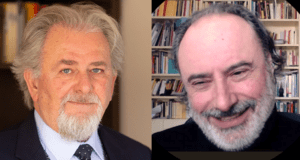
Neither Stefano nor I have anything to do with sailing or nautical activities. Stefano is passionate about motorcycles, music, and cinema, with no relation to water. I have been a professional athlete for years, in the third category of FIBIS, recognized and integrated within CONI, speciality 5-pin international billiard, among other interests like films and music—again, no water involved. But the similarities are seriously considered, and my image of these first few months of 2024 is precisely that of a hard tack.
Sticking with the metaphor, for almost two years we tried to keep the wind at our backs, leveraging the current generated by kaizen, six-sigma, WCM, and Lean in all its forms, seeking accommodations, integrations, innovation in continuity: field confrontations with “subject matter experts” and laypersons left us no alternative, as we weren’t getting anywhere.
Doubts were there from the beginning; Stefano often grumbled, few like the Japanese approaches, the kaizen terminology sounds stale, it’s irritating, we should be able to do things without having to name them, it confuses people, they think they recognize something they’ve seen before, and end up not understanding what we’re actually doing…
From the standpoint of method specificity, the tekné, he is my Maestro. We began addressing it ten years ago, when I was involved in corporate task forces for change and organizational development, setting them up and supporting them until the change/development was achieved. I taught at university and worked as an executive coach; he had already mastered nearly all of it—kaizen, green belt, lean, the whole repertoire.
Our common finding, on partly similar and partly different fronts, was: damn, people don’t learn, one in ten if we’re lucky, and we are not often lucky.
The problem isn’t the techniques or tools, the obstacle isn’t there: where is it, and how do we remove it?
We figured it out two years ago, Human Behavior Systemics (and Learning, since learning is a behavior, a very special one, but it remains a behavior) provided essential keys to completely reconfigure the method (here I am the Maestro). Stefano, very skilled, conducted the necessary experiments on his sites, with positive outcomes; I conducted other experiments in completely different areas, bringing significant confirmations.
We started with MK Consulting, microKaizen Consulting, trying to keep the good parts of everything (tailwind), but we only managed to achieve satisfactory results where and when we had the courage to let go of practically everything that had marked the steps of those before us: we understood the reasons, and, not happy about the tack we had to take (it’s a damn hard job for us), we began it, and now we are sailing close-hauled.
I confirm, neither Stefano nor I have anything to do with nautical activities, but you don’t have to be an expert sailor to know what it means to sail close-hauled… well, I admit it, I did take some sailing lessons, I wanted to experience moving without the noise of engines, chains, and gears, but it’s not necessary, for our purposes, neither for you reading this, nor for us.
Stefano and I are not particularly fond of Italy; we consider ourselves citizens of the world and would like to be seen as such. The national-popular horizons do not excite us at all; we constantly deal with global issues that cannot be resolved on a local scale. But whether we like it or not, given that, willingly or unwillingly, Stefano and I were born and raised in Italy and are Italian citizens, we have to accept it.
There are two keystones of the method, elements known across all latitudes and longitudes: value and connection.
We’ll get back to this, talk about it again. The terms are simple, even trivial, but the meanings and nuances we employ, applied in the practice of the worksite (we also give up gemba, sigh, I liked it), pushed energetically and repelled even more energetically towards taking every single moment as a place of production and expression of value and dis-value, non-value (sadly, no more muda, mu-ri, they were so handy…) are not at all.
The true importance of the hero and sidekick relationship is anything but trivial: each person is, knowingly or unknowingly, someone’s sidekick, and at the same time, everyone is potentially a hero, who benefits from having a reliable sidekick to perform effectively.
Yes, here Stefano, an unrelenting cinephile, would say, just as it is impossible to imagine the success and the great performances of Laurel without Hardy, Totò without De Filippo, or other famous pairs like Mulder without Scully, Sherlock Holmes without Watson.. out of the metaphor, sidekick and heroes are everywhere.
These partnerships, whether in comedy, drama, or action, illustrate the indispensable dynamic between a leading figure and their supportive counterpart, each enhancing the other’s strengths: please note that the first heroes are those who directly deal with the real processes, and their sidekicker are their supervisors…
And so we must let go the senpai-kohai twosome (sigh, I really loved it), we have a different story…
It’s just a metaphor here, to try to help understand: there, on the worksite, it’s flesh and blood, tough stuff, strong stuff, every minute, every hour, every day: not trivial or obvious at all, but a conquest of every minute, every hour, every day.
The name is not the thing, they say, but names are only the tip of a complex network that indicates interactions and meanings in the mazes of our mind: we don’t want names, interpretations that substitute for what we see with our own eyes… the attempt, difficult, and not even that new, the invitation to go, to return, to the things themselves, has been around for at least two centuries, failing at that time, now appropriately fueled, today, by a better understanding of how we function as living systems, well, it’s successful.
To prolong here, now, the attempt to explain what it is, what the new method consists of, is a waste of time, words would take over things: thinking by doing, doing by thinking, are the best descriptive approximation, insufficient and inadequate. Why? Here we are just thinking, that’s not enough, it’s necessary to do-while, think-while.
For this reason, we have not been able to find better alternatives, the microLAB, the microLABs, are the only gateway, there it is doing-thinking, and thinking-doing.
For this reason, the turning point: ValiNova takes the baton and proceeds, sailing close-hauled.
Sailing close-hauled presents not just a challenge, but an opportunity to harness the winds of change effectively. It demands skill and precision, yet it is within these very conditions that we find the potential to excel and advance. With ValiNova, you’re equipped to navigate these challenges successfully, turning potential headwinds into a course towards achievement.
Your microLAB awaits you, patient, it’s not in a hurry, and it does not linger: the sooner you start, the sooner you arrive.
