

500,000 Euros Found… Now What

Found 500,000 Euros… Now What?

It’s a beautiful noon, the rain has stopped, and there’s even a bit of sunshine. It’s Friday, and Jubal seems unsure whether to laugh or worry. He shares an Excel screenshot, summary tables of piece numbers per shift, current times, target times, different machine usage. “I started on this last night, I couldn’t resist. These are simplified tables, the numbers are extracted from five other sheets… no, I haven’t done all the homework yet, the video of the first span’s processing phase is missing, I haven’t collected the numbers on-site yet, not yet, I got these from the CNC… yes, I’ll make the video, but now, guys, this is… well, doing it this way cuts the times and doubles the output… that means half a million euros a year, in net margin, without spending a cent more. I’ll build the new equipment with the savings from not using the current one, which will be used elsewhere…”

Well, folks, it’s the first time after a dozen microcycles that a kohai has “discovered” such a substantial windfall so early. At first, I’m not even sure I understand it correctly… but why doesn’t he know whether to laugh or worry?

My brain needs time to piece it together, and I certainly didn’t expect this from the previous microcycle… the agreements were “well-verified reality (gemba, video) versus the standard cost of ONE standard cost…”

Probably, if I were in Jubal’s shoes, I would have done the same, senpai or not, I want an approximate idea of where I’ll end up… yes, I think I wouldn’t have resisted either, even though I know perfectly well, from repeated experience, that Excel tells you what you want to hear if you interrogate it long enough and with determination… and in Jubal’s place, I would really want to hear “yes, bravo, eureka! You did it!”

Jubal seems simultaneously happy and worried… Stefano proceeds cautiously, not moving (and I understand why, if the source is Excel, the risk is that we’re listening to the Oracle of Delphi, “ibis redibis non perieris in bello,” a matter of commas, just like Excel) from keeping his attention focused on the data source… how did we verify the existence of the gap between standard costs and actual costs? By thinking about it or by going to see, at the gemba?

Stefano has seen much more than I have, he gets alarmed (and that’s exactly what should be done) when we lose real, direct, physical contact with the gemba… as systemic thinkers, we know that virtual environments (what’s in our mind) must be kept as close as possible, physically, to real environments, thinking-doing and doing-thinking, to avoid getting lost in the infinite combinatory possibilities our wonderful minds can generate… of these, few, very few, are good, and only the gemba helps us not to get lost.

And no, it’s not enough to be physically at the gemba, we’ve all been there, we’re perfectly capable of being present, physically, in a place, and simultaneously not being there at all, of following, as it’s commonly said, the thread of our thoughts… the video is ruthless, it doesn’t follow us, start, record, and it sees only what can be seen while we can go, virtually, anywhere.

A kind of safety device, in short…

But what the hell is worrying our Jubal? He should be as happy as a clam, but he doesn’t look it, what’s buzzing in his head?

We only have fifteen minutes, it took us a while, but we’ve become quite good, we rarely overrun, and if we do, it’s not by much. We converge on the next step, in view of the next microcycle, good for the encouraging projections, we’ll see. The step remains: well-verified reality (gemba, video) versus the standard cost of ONE standard cost…

Jubal seems curiously reassured, we’ll see what has been bothering him and find a good solution. For now, let’s take this step. Bye, have a good weekend, see you Monday…


He gave us a reason a while ago; this is one of the production lines dedicated to a flagship product… it’s not doing badly, and, simply put, you don’t change a winning team, right?

It seems that Jubal thinks it won’t be that easy to “convince” the big boss to approve the improvement plan, even though half a million euros in net margin should really excite him, it’s a great result… yes, okay, we need to do our homework well, prepare data and evidence, actual costs vs standard costs, new production cycle setup, savings, new marginality…

Jubal informed his boss at the time that he was working on an improvement idea with our support, but his boss hasn’t been involved in all the steps we’ve taken, he gladly gave his approval. How can we make him understand what Jubal can achieve? We’ll have to address it…

It’s also possible that we ourselves, microkaizen, become part of the problem, not the solution: in that company, they’ve done everything, six-sigma, WCM, Lean, and now here we come with a completely different method, just what they needed… it’s certainly possible that we encounter “resistance” from the other factions, how will we handle it?

It’s not a matter of envy, commonly put (let’s set aside systemic thinking for a moment), it’s that it’s not easy to accept that things were done in a way that didn’t generate that margin, there’s a risk that someone fears losing face, losing credibility… take my bag, before it wasn’t mine, now it is, later it won’t be mine anymore, but don’t take away my name, my honor: this doesn’t make you rich, and it makes me very poor.

It shouldn’t be this way, of course, systemic improvement needs a no-blame context, where nothing that has been done (or not done, that’s also doing) is used to discredit. The constant focus on the gemba, on continuous improvement, is safe within the framework of recognizing that everyone can only do their best, can only do their best: and we all start from this to improve and keep improving.

And then, for us, there’s the bigger risk, the risk that this work is mistaken for what it is not and should not be: we do not do cost cutting, cost reducing, cost saving, process optimization, it’s not enough, those are just shadows, side effects.

With all due respect, it’s junk, shiny fool’s gold that seduces and distracts from the focus that must be kept constant on the search, on the gemba, for value and non-value, basing every improvement initiative solely on that, and on building, every day, senpai-kohai relationships among those who work together.

Jubal has also taken the first steps in this regard, sharing some parts of the work he’s doing with us with his collaborators, he hasn’t told us much about how and what he did, but the little he told us, he told us while laughing contentedly…

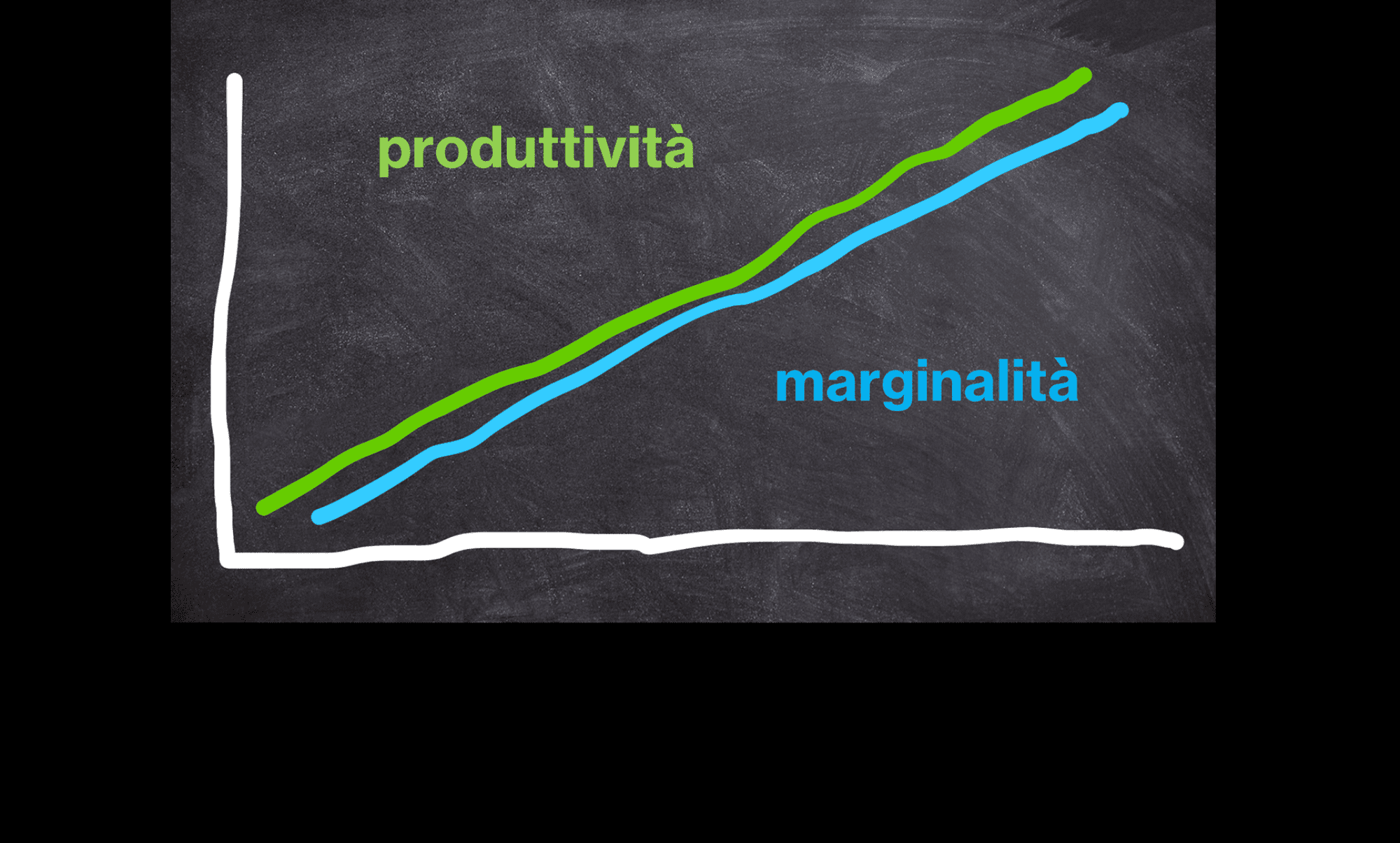
The half-million-euro windfall risks overshadowing what has greater value not just for Jubal and his boss, but for the whole company: yes, it’s the method, this is what needs to be protected, spread, and supported, this is what has the greatest value, this is what allows the organizational machine, the organizational system, to improve, every day, productivity and marginality.

Not that Jubal has influenced us, but we too are simultaneously happy—good grief, it’s quite a windfall—and worried about how it will end… maybe it would have been better not to find 500,000 euros…

Time in Improvement

We are looking at a plant layout made with CAD—clear and precise—one of the five bays served by the overhead crane. Francesco connects each section to the videos we have examined together: “Here’s this one, here’s that one,” starting from the third section from the bottom up, where a machine performs a task. The piece must be positioned with millimeter precision; otherwise, not only does the task result in a defective piece, but the machine literally falls apart… it has happened more than once. Lesson learned, it doesn’t happen anymore. But the price to pay is that the transport and setup time for the piece to be worked has become very long. The special tool used by the overhead crane to transport the semi-finished product from the previous station to the third section allows for a final setup in a few seconds but imposes a very long time, which has a significant impact on the number of pieces that can be worked per shift… So explains Francesco, and we see that he has recorded the muda with this label: transport time. Seeing so many, it’s quite normal at the beginning to scrape one’s eyes and record only what is seen—it’s easier said than done. I try a good analogy: “Francesco, I ask you to remove the time from your recording, column M, cell 16…” Francesco looks at us slightly surprised; it probably doesn’t seem like an unacceptable request. We see him move the cursor towards the cell… I continue: “Indicating the time here risks confusing us. Time is not important at this moment; it doesn’t matter how long it takes now—it’s a transport muda. The non-value remains until we eliminate it. We are now hunting muda, not their shadows… I know it takes some training; the good old software immediately tells us their opinion, so we record ‘transport time’ without realizing it. We remain within a mental perimeter where we can’t even conceive the idea of eliminating it, while that is exactly the direction we can and must go. Through improvements, we will never reach the ideal condition of zero transport muda; we already know that, but we can always improve. Time and costs are useful, but they serve after we have managed to keep muda at the center and never forget them: time and costs are our mind’s elaborations. We don’t see time, and we don’t see costs either. Muda at the center—clear, clean, sharp, precise always.” Francesco nods, modifies cell M16: transport, period.

I am not a teacher, with or without a stick. I don’t teach and don’t want to teach anyone anything… I say it often. I try to mitigate it, but I don’t think I have resolved my transport muda: in the world I am in now, there are no errors, no faults… it takes little to conclude that, well, there are no right things either and no merits. And this conclusion, which is true for me, also scares me. It remains the best I’ve found so far. How to help Francesco present, help him in the mise en place of his new piece of software? For me, it has now become “almost” automatic, but on this automaticity, I try, and it seems I succeed, to exercise continuous “control.” I want (not “must”) to be aware of the step I’m taking, even if it comes easy after many years of practice. But every time is new; every time what happened before—hundreds of faces, thousands of situations faced—no longer counts, no longer serves, I can’t rely on it: who I have in front of me now is a unique and unrepeatable form of life similar to me and everyone for the systemic part; some software parts are similar, but even if plausibly a minority, the share of different neural software is what decides success or failure. I know that the person in front of me “works” using software that I partly don’t know, that has no precedents and won’t repeat later, and I know that it’s precisely how I manage to govern the interactions and iterations with this share of original and unknown software that totally determines the success or failure of my work… and my client’s work, on which my survival depends again, and returning to the client, his success or failure in achieving what he desires for himself: productivity, profitability, continuity, security. How do I get Francesco to look steadily without getting confused, without losing grip, at the things-to-change, keep the impossible horizon of zero muda clear, and not follow the “shadows” of the muda, the side effects they generate in the process flow we are trying to improve? “Francesco, I ask you to remove the time from your recording, column M, cell 16…” No matter how I put it, whatever I say or do, simply because it is different from what he or she evidently uses, it poses itself as a disconfirmation, sounds like it’s not right/correct/appropriate… this happens to all of us always, and there’s nothing to do about it. We work like this. We are systems—I know I’m repeating myself, it’s inevitable—equipped with sophisticated control systems since we are extremely complex and sophisticated systemic “machines,” we vitally need our continuous checks to give a green light not only to heart-liver-lungs-pancreas-muscles-brain but also to the neural network, basic software, and specialized software. That Francesco records “transport times” is neither fault nor error, nor right nor wrong; it is certainly the best he could do when he did it (oh yes, this is an absolute truth, always true not just now): what I present to him tells him that his software might have failed. In his world, let’s say the normal world, that is a mistake, and if it’s a mistake since he did it, then he was wrong. If he was wrong, he wasn’t up to it (it’s his fault); if he wasn’t up to it, he’s in danger—they can fire him: our control software, when faced with negative feedback, activates standard protections. There are several; the most frequent is to ignore it, process it as a false negative, and move on. The second is to demonstrate that the negative feedback is wrong; it usually implies that even the one providing negative feedback is wrong. What is wrong is a threat, better get rid of it. We don’t do it on purpose; this is the basic functioning of everyone… and how do you “overcome” it? Yes, I know I declared at the beginning what attenuator I introduce as soon as possible. I don’t teach anything to anyone, I don’t judge anything or anyone, maybe he listens and accepts, maybe he doesn’t believe it and processes it like, “yeah right, another one”: Francesco has seen dozens of consultants in his life, these are things they say… Even if it is the pure truth, nothing I point out to Francesco is new to him. He literally knows everything he needs to know; he has all the connections between the pieces he needs to manipulate: technically, literally, I don’t teach anything. This doesn’t mean I do nothing. Sure, I am an active element of a transformation that otherwise most likely wouldn’t happen… very few succeed alone in this field, I can think of a couple out of hundreds. I didn’t declare within which frame, which framework I did what I did, and neither what I did (and especially didn’t do) to build that framework within which we interact—the part of the framework that depends on me… and I certainly won’t say it. It’s one of the most precious secrets of the craft I practice. I could say secret of the art if I considered myself a Master, and I don’t like considering myself such. Anyway, I keep the secret… if Taiichi Ohno kept it for decades, well, I think I will imitate him. The value lies in the “product” delivered, and here delivered means that it has been accepted and is used. Everything I do before this condition is muda; I am muda for all the time I’m not processing with my client what he needs for his success. There is transformation only there; only transformation is value, generally between 1% and 5% of any production process measured in time, if you want. And nothing guarantees that the “process” succeeds without producing defect muda. Every time is an experiment to build together, and then… well, you probably know the rest. And if you don’t know, you know how to find me.

Key Elements :

  1. Elimination of Non-Value Activities: Emphasizing the importance of identifying and eliminating muda (non-value activities) to improve process efficiency.
  2. Focus on Core Value: Highlighting the need to focus on core value activities rather than being distracted by secondary factors such as time and cost initially.
  3. Collaborative Problem-Solving: Showcasing the role of collaborative efforts in identifying and addressing process inefficiencies.
  4. Continuous Improvement: Commitment to continuous improvement through iterative analysis and refinement.
  5. Learning and Adaptation: The importance of learning from mistakes and adapting strategies to achieve better results.
  6. Customer-Centric Approach: Ensuring that the ultimate goal is to deliver value to the customer, thereby ensuring the success of both the client and the service provider.

The Time of (Continuous) Improvement

Key Elements

  1. The Importance of Time in Continuous Improvement: Emphasizing that time is not the real issue, but rather the prioritization and value of continuous improvement activities.
  2. Short and Effective Sessions: Highlighting the method of short, focused sessions to gradually integrate continuous improvement into daily routines.
  3. Human Biological Machine: Explaining the concept that humans operate as biological machines using neural software to make decisions and take actions that ensure survival and improvement.
  4. Overcoming Resistance: Addressing the natural resistance to change as a protective mechanism and how it can be managed through understanding and small, incremental improvements.
  5. Continuous Improvement as a Natural Process: Reinforcing that continuous improvement is a natural, ongoing process that aligns with the inherent drive for survival and betterment.
  6. Non-Trivial Solutions: Acknowledging that solving complex problems often requires understanding the underlying causes and that sometimes simple solutions can lead to new challenges.
  7. Prioritizing Improvements: Encouraging the reader to see the value in prioritizing improvements and integrating them into their daily workflow without disrupting current productivity.

The first thing we regularly bump into at the beginning of our work dedicated to Continuous Improvement is the feedback from the people we deal with in the Client System: all of them, without exception, after expressing great appreciation for the method and the result samples obtained by the “product” champions, either before signing the contract or after signing it, sometimes after looking at the agenda but more often without even looking at it, burst out in one of the many variations of “eh, but I don’t have time.”

Our method involves short online sessions (no, no chatAI, there’s one of us on the other side of the monitor in flesh and blood), we aim for 20 minutes… short and close sessions, sometimes even 5 a week… eh? Oh no, not at the beginning, at the beginning, it’s a miracle if we manage to do two.

For heaven’s sake, it’s 20 minutes, how can you say that during the day you can’t find twenty minutes (by the way, usually paid by the company, not by you) to take a sustainable step to generate improvement!

We generally deal with extremely serious and responsible people, adults with good, if not excellent, skills, people who certainly do not waste their time… with the most frequent result, more than one would believe, that we spend 20 minutes or more with them explaining in detail why they don’t have 20 minutes for continuous improvement.

Formidable.

This thing doesn’t sit well with me, I can’t stand it. At least I would like to know what and where the problem is, what it is like: it’s not that I don’t know that knowing well what the problem is doesn’t necessarily give you the solution; the two things are correlated, not causally connected.

Sometimes you solve the problem even knowing little or nothing about the problem itself, apart from the fact that it’s a bit annoying and it’s better if we get it out of the way… then the solution found can generate (and often does generate) a new problem, well that’s to be seen later.

And sometimes the most serious and meticulous investigation leads to the disconsolate conclusion: there is nothing to be done, the problem cannot be solved… not that I don’t know that by definition if a problem has no solution, then it is not a problem, not here and now: here and now it’s an alley we can’t escape from, maybe in the future, not now. Maybe we can mitigate it, this is generally possible.

As it stands, my feedback converges on the initial non-solvability; initially, it’s really a wall in favor of some possibilities of mitigation.

Naturally, time has nothing to do with it, this is clear and evident, crystal clear, we all know it… even if this knowledge is mostly common sense… as is common sense, more or less chuckling under the mustache (metaphorically), pretending to know instead what it is about.

If time has nothing to do with it, then what is it about? In the vernacular of my native land, the answers are two: “voja” and “b’sogn,” desire and need, two distinct classes of phenomena extremely popular.

Among the latest more articulated and evolved heard, there is certainly Priority: the issue is relevant, important, the solution is good, more than good, but there are other priorities. It is not difficult to see in this term a much more sophisticated reading than the popular terms “desire” and “need” can offer. Appreciable and generally appreciated.

The result doesn’t change.

And I laugh a bit to myself; in good measure, it was the same first reaction I had a long time ago at the beginning and that I still have now when I come across something that I know I should deal with to improve it in a structured, scientific way from start to finish.

Well, I have other priorities too; not all desires can be satisfied, not all needs can be met, not all at once; I have to go by priorities like everyone else, right? At this moment, I should be dealing with other tasks of higher priority, and the fact of dedicating time to this task annoys me a bit: the only advantage of this condition, in my opinion, is being able to bear direct testimony of a deep and lived sharing of the problem.

Is it really a problem? In all conscience, yes, it is. By saying desire, need, priority, we have only scratched the surface; the knot is much more complex and arduous to solve: I don’t think I can solve it in the space of this article; I hope to help start it on the way to a solution; we’ll see shortly. Let’s try to move towards the root; the other direction is less promising; we would find ourselves dealing with culture, customs, habits, rules of civil living, traditions, innovation, in short, with materials very slippery to handle without the necessary precautions and warnings.

Moving towards the root is less risky; we move in the direction of gemba, observing real processes: we have something real to consider, to observe, even if this is a kind of “asynchronous conversation” the “fact” to observe is that now you are reading here and now there is a “biological machine” alive and able to read, that machine is you, certainly, absolutely you. At the moment you are reading, I could certainly be dead; what you are reading could be the graphic translation of a recorded message that reached you and that you “decided” to read, and this is a second fact, not observable but inferable, conjecturable, the result of a falsifiable hypothesis… yes, I can make it very hard, but I will not.

What does this have to do with anything? The fact that you are a living biological machine, a living creature here and now, is indubitable, firm, and certain. From this starting point, kaizenists would go to look for something else; we, on the other hand, try to tell ourselves in the most concise and truthful way possible why you are still alive.

Oh yes, I know we could spend hours describing everything related to our observational feedback; we don’t have time (eh eh), I try to indicate the way and do a piece with you: you are still alive because you (your biological machine) have made decisions and acted in a way that has allowed you to stay alive.

We have little time left, corresponding to about 800 words, how was it possible that you made those life-saving decisions and performed those actions that saved your life (so far)? Again, I’ll cut it short: you have a neural network, the CPU of the biological machine, you have many programs, many apps, neural software that you use to make decisions, to formulate judgments, and guide the actions you perform; this allows you to finely govern the interaction with your environment and survive, continue living.

The fact that you have succeeded is proven beyond any reasonable doubt by the observable fact that you are here and now a living creature: this proves beyond any reasonable doubt that your apps, your neural software have been effective so far; they have worked well.

Could it have gone differently? Certainly yes, obviously yes, but it didn’t. Your neural software has proven reliable, “good,” effective, safe at least from the point of view of the most important feedback of all: here and now you are a living creature… oh yes, we don’t forget the rest: others, money, popularity, affections, relationships, there’s a lot of other stuff, and maybe for you, the situation is favorable even in these other important aspects.

But the first would be enough; the others increase the strength with which, more than understandably, legitimately, humanly, you protect your good neural software as all biological machines, all living creatures do.

It would be totally senseless not to do so. Some call this “resistance to change”; well, I detest that; this is life protection, nothing more, nothing less.

And then someone comes proposing a nice continuous improvement program, no less than microKaizen, doesn’t sound bad, advantages here, advantages there, nice, isn’t it? You, your biological machine, immediately know there’s a danger, a risk here: after all, you deal with continuous improvement of your life every day, all the time, this is just a way to describe the effects of the “life drive” that all living creatures from viruses to homo sapiens undergo all the time, whether they know it or not, whether they want it or not.

And since here and now you are a living creature thanks to your neural software, the ones you already have, well maybe we’ll think about it if we have time (eh eh)… and if you have also had other forms and proofs of success (always thanks to the neural software you already have) well yes, better think about it well, always if we have time, life goes fast, we are always in the middle of so much stuff to do, half of it is enough and more.

I am pretty sure you haven’t already thought about all this; it’s stuff for specialist-specialists, even specialist-once work like this without knowing it, but work like this…. oh yes, I specialist-specialist-twice work like this with the only small difference that I notice it and know how to name and reason what happens to my biological machine, in short, to me.

Does this change anything for you? I can’t know, I am not here, and even if I were, I probably wouldn’t know. I can only tell you that without changing priorities, initially maintaining (then it increases) the current productivity without resorting to extra time, the time to deal with continuous improvement with us, not surprisingly with our help, jumps out. And suggest a couple of things: the first is that it’s never a matter of having or not having time, never; the second is that it’s worth not running too fast: true, your neural software has proven to be good software so far; you can increase your degree of satisfaction and benefit from improving your software and that of those you work with. Oh no, before you ask, it’s not about “time management” at all, but about quickly acquiring greater ability to get rid of what has no value… a small software upgrade, nothing more.

MUDA – PART 3 – WHAT MAKES THEM INVISIBLE

Every person in their work aspires to generate value for themselves: remember when I asked how you would feel if after the five minutes you hadn’t found paper and pen (see MUDA – PART 1)? Muda is frustrating and so obvious and evident that we don’t think to ask why… something that often happens with everything that is obvious and evident to us. Strengthened by this evident obviousness, we embark on the safe path of seeking and removing MUDA. This is the way to improve any product and production system: increasing value (units produced but also adding functions for which the customer is willing to pay) and eliminating MUDA. Muda is an unequivocal criterion that directly relates what we do and what we use with the person for whom we do it: the customer. It is so fundamental that Ohno dares to say: “Consider the waste of overproduction for example. It is not an exaggeration to say that in a low-growth period such waste is a crime against society more than a business loss. Eliminating waste must be a business’s first objective.” Notice the concept of ‘society’: it is something that concerns ALL OF US. It is an enemy of everyone. It is not understood why the hunt for MUDA and their removal have not always been the most developed activities by all humans: but since it removes frustration, makes us victorious in competition, and in the end protects society and protects us all: few things can do as much, at the moment I can’t think of any. So what are we waiting for? Over the years, I have encountered a surprising difficulty from many people in accepting the concept of MUDA for what it is. They confuse it with an ‘error’ or something that went wrong, or at best, they accept muda only in cases where they already see a possible solution to remove it: the definition of MUDA is simply the absence of value (for the customer!) and has no relation to the cause for which that specific MUDA exists… and it’s not even that if we find a ‘reasonable’ reason that MUDA becomes value… It is precisely the MUDA that we do not see today and for which we have no idea how to remove today that hide the greatest potential for improvement: what sense does this recurring confusion make, what sense does the enormous difficulty encountered in obtaining rapid understanding and willing commitment make? I have sought answers for years, and little by little, I found them: Ohno was brilliant in intuitively understanding that MUDA (waste, here we go again with the unfaithful English translation—waste in Japanese is NOT muda but mottainai!) are a crime against society, and I dare to widen the horizon even more: they are a crime against all humanity… and so? Is this perhaps enough to remove all difficulties and obstacles? Evidently not, something else is needed. Maybe we will write an appendix chapter dedicated to the MUDA of thought, but there is little doubt about the existence of something that vehemently opposes kaizen, whose symptom is precisely the difficulty in grasping the key of MUDA. What then opposes a smooth and fruitful search, identification, and removal of muda? To date, the best answers I have found come from a sophisticated systemic analysis that forced me to re-examine what I initially pretended to accept as obvious and evident: kaizen of production processes requires not taking anything for granted, the kaizen of kaizen is no less. I simplify as much as possible a part of what I found: each of us is a living biological system, but always a system. We are enormously complex, our functioning is indescribably complex, but not incomprehensible, not mysterious, no more than any other form of matter. It is necessary to develop specific learning to fully utilize MUDA, which does not only concern MUDA (in themselves relatively easy to catch) but concerns how our system manages continuous improvement, which is one of the possibilities that each system has to respond to the need to survive, the drive to survive. What do you mean by “one of the possibilities”? Are there perhaps other possibilities to respond to the need to survive? At least one yes, we all have it before our eyes every day: not improving, not changing anything, attempting not to change anything… it is not my path and I hope it is not yours either. I found two formidable orders of factors that make the blockage to recognizing Muda and continuous improvement completely sensible. The intertwining of elements and correlations is astonishing once you manage to know and understand a bit more about how we function: guilt, error, inadequacy, devaluation, and fear of being expelled are the first processes our system executes when called to deal with MUDA, executing neural software largely hereditary. We all have these neural software programs, our DNA transmits them to us, the fruit and gift of millions of years of evolution: all these neural software programs have protected and made possible our survival as a species over millions of years, and it is relatively easy (not necessarily short) to identify both the “reasons” for their configuration and the survival advantages for the species and the individual in dealing with the environments in which our species evolved. Environments that have changed little for millions of years… in a few hundred years, the impact of our species on the environment, the only living species capable of modifying the environment to make it suitable for its own survival on such a large scale, has made our old hereditary software increasingly unsuitable for the purpose. But they are still the hereditary neural software programs we all primarily rely on, whether we like it or not, whether we know it or not, to “guide” our lives and survive with more or less ease. This is the first order of factors that hinder the recognition of Muda and continuous improvement. There is a second, as I mentioned, let’s see it. Learning is constructing and modifying new neural software, no more and no less, a process that occurs under the conditions prescribed by our DNA: for example, a condition (not the only one, of course) that must be met is that the system (individual subject, group, organization) accepts and recognizes the necessity to learn and change. Attention, the term used is a precise key: necessity, not opportunity. Again: when this condition is verified, it is essential to be prepared to deal with a vital necessity of each living subject constituted by obtaining continuous proof of its good functioning, which includes the constant search for confirmation of the good functioning (effectiveness, efficiency) of its neural software. This, strictly correlated with the factors of the first order, makes perfect sense of both the “unavailability” to identify Muda and their (initially for sure… but it can go on for a lifetime) conversion into “error” or “bad luck (something went wrong)” and the limited willingness to recognize those for which a solution has already been found (quickly obtaining confirmation of one’s good functioning). What I myself for years considered a bizarreness, nonsense, the result of someone’s error (including myself naturally, indeed myself first), I managed to transform into something totally sensible and above all, manageable and improvable. And this too is kaizen: identifying the muda of the kaizen enabling process is part of the kaizen of kaizen made possible by an activity we will explore shortly, grasp the problem with the support of a deceptively simple and banal tool, the A3.

Keys:

  1. Understanding Muda: Explaining the concept of muda and its significance in improving productivity and value for the customer.
  2. Challenges in Identifying Muda: Highlighting the common difficulties in recognizing and accepting muda, even among experienced professionals.
  3. Systemic Analysis: The importance of a sophisticated systemic analysis to truly understand and address muda.
  4. Biological and Systemic Factors: Discussing the role of hereditary neural software and systemic factors in hindering the recognition and removal of muda.
  5. Necessity for Learning and Change: Emphasizing the necessity, not just the opportunity, for continuous learning and change to achieve continuous improvement.
  6. Kaizen of Kaizen: Introducing the concept of the kaizen of kaizen, the continuous improvement of the continuous improvement process itself.